Across the highlands · 70 min · Meat · Main course · For beginners
Phaksha Paa
In German: Schweinefleisch mit getrocknetem Rettich und Chili
For 4 servings · US units
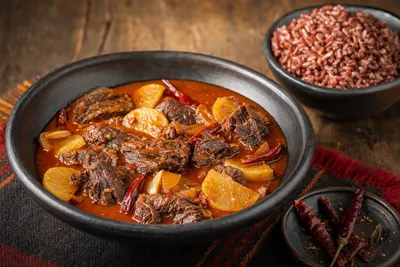
Braised pork belly with daikon, dried chilies and ginger
Phaksha Paa is one of Bhutan's best-known dishes: pork belly braised until the fat turns soft and the sauce tastes of chili, garlic and ginger. The daikon soaks up all that seasoning and rounds the bowl out. Serve it with steamed red rice — and if you want it the classic way, put a dish of Ema Datshi alongside.
Ingredients
- 1⅓ lbpork bellycut into bite-sized pieces
- 7 ozpork shoulderdiced, replaces part of the belly (optional)
- 7 ozpeeled and slicedA large white winter radish, juicy and crisp, mildly peppery raw and soft and sweetish when cooked.Substitute: Small red radishes work raw at a pinch but are sharper and less juicy; for cooked dishes, white turnip matches the texture better than the flavour.Read more
- 6Dried red chilieswhole or roughly chopped, heat to taste
- 1onionfinely chopped or sliced
- 4 clovesGarlicminced or as paste
- 1 tbspgingergrated or as paste
- 2⅛ cupswaterfor braising, stock as an alternative
- 1 tbspVegetable oilfor frying
- 1 tspTurmericground
- ½ tspground, for its resinous aroma (optional)Dried husks of a citrus-family shrub, not a true pepper. Lemony and floral, with a tingling, numbing effect on the tongue.Substitute: Timur and Sichuan pepper stand in for each other well. Black pepper with a little grated lemon zest roughly matches the aroma, but the tingling and numbing are lost entirely.Read more
- black pepperground, to taste (optional)
- 1 tspSalt
- roughly chopped, to garnishThe fresh leaves of the coriander plant, with a strong lemony, slightly soapy aroma.Substitute: There is no real substitute: flat-leaf parsley gives the fresh green but not the lemony aroma, and ground coriander seed tastes entirely different.Read more
- 5¼ ozsliced, as additional vegetable (optional)Chinese leaf cabbage with fleshy pale stalks and dark green leaves, mild with a faint mustardy note.Substitute: Swiss chard comes closest in bite and structure but tastes earthier; napa cabbage is softer and more watery, and spinach replaces only the leaves, not the crisp stalks.Read more
- steamed, to serve (optional)Rice with a reddish-brown bran, in the Himalaya mostly a semi-milled short-grain rice from Bhutan; nutty and slightly sticky.Substitute: Red Camargue rice or short-grain brown rice comes close in nutty flavour; brown rice takes longer, stays more separate and lacks the red colour.Read more
Method
- Heat the oilHeat the oil in a heavy pot — ghee works just as well if you prefer it.
- Soften the aromaticsSoften the onion, garlic and ginger over medium heat until translucent, without letting them colour.
- Brown the porkAdd the pieces of pork belly (and the diced shoulder, if you're using it) and brown them all over so they take on some colour.
- Toast the spicesStir in the turmeric, ground sichuan pepper, black pepper and salt and let them toast briefly until fragrant.
- Fry chilies and daikonAdd the dried chilies and the sliced daikon and fry for a minute or two.
- Add liquid and boilPour in the water or stock and bring it to a boil.
- Braise coveredCover and braise over low heat for 30 to 45 minutes, until the meat is tender and the daikon is cooked through.
- Reduce and seasonTake off the lid and let it bubble away uncovered until the sauce has thickened, then taste and adjust the seasoning.
- Garnish and serveScatter with roughly chopped cilantro and serve hot.
Tips and variations
There's more than one route to the same bowl: you can first simmer the meat in salted water (a pressure cooker is fine too), pour off almost all the cooking liquid, and only then finish everything in the pan with chili, vegetables and ginger paste. A marinade of ginger, garlic, turmeric, chili powder, mustard and asafoetida is worth the effort as well — anywhere from 30 minutes to 3 hours. Pork or chicken stock can stand in for the water, ghee for the oil, and dried pork (jerky) can go in alongside the fresh meat. For more vegetables, add bok choy, bell pepper and fresh chilies, and hold the ginger paste back until the last 10 minutes. If you like the daikon with more bite, add it only after 30 minutes of braising and carry on uncovered. Serve with steamed red rice, classically together with Ema Datshi.
Something not right?
This recipe was put together from independent sources and checked before publishing. Even so, a mistake can slip through — an amount that does not add up, a step that does not work as written. If you spot something, write to us: we will look into it and put it right.