Tibet · 3 h · Meat · Main course · For experienced cooks
Gyuma
In German: Tibetische Blutwurst
For 6 servings · US units
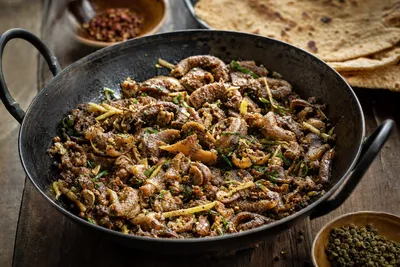
Rice blood sausage in natural casing — cooled, sliced and fried in the pan
Gyuma is a blood sausage where cooked rice keeps the filling loose and grainy rather than dense. The fat clinging to the natural casing is what makes the flavour, which is why the casing gets turned so the fat sits on the inside. It's winter work for everyday eating: the sausages cool, darken as they go, and come back later sliced and fried in the pan.
Ingredients
- 3¾ cupssheep, yak or beef; shake well before mixingFresh animal blood, in the Himalaya usually from yak, sheep or goat, which sets when heated and gives sausages and pan dishes body and a deep, iron-rich flavour.Substitute: There is no true substitute, because nothing else both binds and tastes like this. For fried dishes, set blood cubes from an Asian shop work, but they can no longer be stuffed into sausages.Read more
- 8¾ ozGround beefcoarsely ground (approx. 6 mm plate)
- 14⅛ ozRicecooked and cooled; preferably a thicker grain
- 3sheep or lamb casing, cleaned and turned fat-side inCleaned animal intestine, usually from pig or sheep, used to hold sausage filling.Substitute: Edible collagen casing works for fresh sausages, but it stretches less and splits more easily when boiled. Without any casing, the filling can be rolled tightly in cling film and poached, though it will have no skin and no bite.Read more
- 1⅓ ozOatmealadds extra binding to the filling (optional)
- ½ ozSalt
- ⅛ ozBlack pepperground
- ⅛ ozCuminground
- ⅛ ozNutmegground
Method
- Thaw blood and cool the riceThaw frozen blood slowly and completely the day before. Cook the rice, spread it out on a tray and let it cool right down — warm rice would spoil the mix.
- Prepare the casingScrape and rinse the casing thoroughly under running water, being careful with the fat that clings to it, since that's what gives the sausage its flavour. Then turn the casing so the fat sits inside, rinse once more and cut it into manageable lengths.
- Mix blood, beef and riceShake the blood well and pour it into a large container. Add the coarsely ground beef, the cooled rice and, if you like, the oatmeal, and stir everything together.
- Season the mixtureStir in the salt, pepper, cumin and nutmeg. The mixture stays thin and settles, so keep stirring it as you fill.
- Fill and tie the sausagesPull a length of casing onto a funnel, fill it loosely with the mixture and smooth out any air bubbles. Don't pack the casing tight, because the sausages should stay fairly flat. Tie the sausages off every 20 cm and divide them into manageable strands.
- Poach until cooked throughPoach the sausages in plenty of water at 175 °F for about 30 minutes, nudging them into shape with a turner as they go in. To test, prick with a needle or toothpick: if no more blood runs out, they're done.
- Cool in water and chillLift them out, put them into cold water for 10 minutes and then chill. They darken noticeably as they cool.
- Slice, fry and serveTo eat, cut into slices and fry in a pan until they take on colour on the outside. Whatever is left keeps in the fridge.
Tips and variations
Instead of the 80 °C poach you can cook the sausages in vigorously boiling water and simply check doneness by pricking them. The oatmeal is optional, but it gives the filling extra binding. A narrow 28 mm sheep casing makes slimmer sausages than a wider lamb or veal casing; synthetic casing works, though without the fat it tastes noticeably different. The nutmeg isn't traditional — it's the recipe-giver's own addition, so leave it out if you prefer. Gyuma is best straight from the pan, sliced and fried.
Allergens
May contain if you use the optional ingredients: Cereals containing gluten
These notes follow from this recipe's ingredient list. Ready-made products and brands may contain further allergens — please check the packaging yourself.
Something not right?
This recipe was put together from independent sources and checked before publishing. Even so, a mistake can slip through — an amount that does not add up, a step that does not work as written. If you spot something, write to us: we will look into it and put it right.