Bhutan · 60 min · Meat · Main course · For beginners
Sha Kam
In German: Lang geschmortes Rindfleisch nach Nomadenart
For 4 servings · US units
Air-dried beef braised with potatoes and dried red chilies
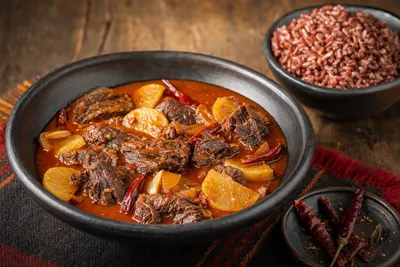
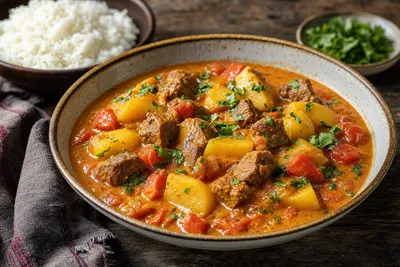
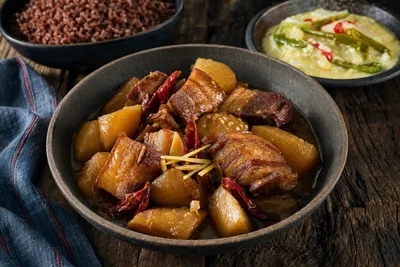
Sha Kam rests on one ingredient: air-dried beef, rinsed, cut into strips and braised until it turns chewy-tender and the sauce clings to it. Potatoes or daikon go in alongside, and dried red chilies bring the warmth you want on a cold day. It's served with steamed rice, and traditionally with a glass of warm ara, the local grain liquor that also does duty here as a marinade.
Ingredients
- 10½ ozcut into long strips, rinsed and patted dryAir-dried strips of beef, lightly salted or unseasoned, hard and chewy, with a concentrated meaty flavour.Substitute: Unseasoned or only salted beef jerky comes closest. Sweet or smoky marinated kinds noticeably change the flavour of the dish. Swiss air-dried beef (Bündnerfleisch) is softer and fine for snacking, but falls apart in long cooking.Read more
- ⅔ ozdried red chiliesstems removed, split lengthwise, seeds shaken out for less heat
- 12⅓ ozPotatoespeeled, cut into long strips
- 1Onionthinly sliced
- 3 clovesGarlicfinely chopped
- 1 tbspGingerminced, for the marinade and the base (optional)
- 8¾ ozpeeled, cut into half-moons; alternative to the potatoes (optional)A large white winter radish, juicy and crisp, mildly peppery raw and soft and sweetish when cooked.Substitute: Small red radishes work raw at a pinch but are sharper and less juicy; for cooked dishes, white turnip matches the texture better than the flavour.Read more
- 2 tbspOilfor searing or added to the cooking liquid
- 1⅔ cupsWaterhot, as braising liquid
- Saltuse sparingly, the dried meat is already salted
- ½ cupas marinade and for deglazing (optional)A clear, traditionally home-distilled spirit from fermented grain, usually rice, made in Nepal, Tibet, Sikkim and Bhutan; mildly sweet and grainy.Substitute: Rice shochu from Japan comes closest, being similarly mild and grainy; soju also works but is weaker and slightly sweeter. Vodka matches the clarity and alcohol but not the sweetish rice note. Chinese baijiu is usually too pungent and would dominate the dish.Read more
- 1 tbspButterstirred in at the end for gloss (optional)
- Ricesteamed, for serving (optional)
Method
- Prepare the dried beefCut the dried beef into finger-length strips, rinse briefly under water, trim off any hard edges and pat dry.
- Marinate the meatIf you like, toss the meat with ara, garlic and ginger and let it marinate for 30 minutes.
- Cut vegetables and chiliesPeel the potatoes and cut them into long strips, or peel the daikon instead and cut it into half-moons. Stem the chilies and split them lengthwise, shaking out the seeds if you want less heat; slice the onion thinly.
- Sear or parboil the meatHeat the oil in a pot and cook the onion until translucent, then add the garlic and ginger for a moment. If you marinated the meat, add it now, sear it over high heat and deglaze the pot with the marinade. If you skipped the marinade, add the meat with about half of the hot water (roughly 200 ml), cover and simmer for 15 minutes over medium heat.
- Braise with the vegetablesNow pour in the hot water: all 400 ml if you seared the meat, or the remaining 200 ml or so if you simmered it. Add the potato strips or the daikon, cover and braise for 10 to 15 minutes, until the vegetables are soft and the meat is chewy-tender.
- Add chilies and reduceAdd the chilies, turn the heat down and let everything simmer uncovered until the sauce clings to the meat; add a splash of water if it gets too dry.
- Season and serveSeason sparingly with salt, since the dried meat brings plenty of its own. Stir in the butter at the end if you like, fold everything together gently and serve Sha Kam hot with steamed rice.
- What to drink with itA glass of warm ara goes alongside.
Tips and variations
Potato strips and daikon half-moons are equally good choices: the daikon stays milder and juicier, while the potatoes thicken the sauce a little. Fresh green chilies can stand in for the dried red ones. A little cornstarch slurry binds the sauce if you want it thicker. A spoonful of butter stirred in at the end gives the sauce a gloss. If you have no dried beef, fresh beef takes its place: sear it hard, then braise it for 2 to 4 hours in stock, which replaces the water. Red wine, tomato paste and soy sauce can go into that stock for a deeper sauce. The braise can also go into the oven at 150 °C instead of staying on the stove. Serve over steamed rice, with warm ara on the side.
Allergens
May contain if you use the optional ingredients: Milk (including lactose)
These notes follow from this recipe's ingredient list. Ready-made products and brands may contain further allergens — please check the packaging yourself.
Something not right?
This recipe was put together from independent sources and checked before publishing. Even so, a mistake can slip through — an amount that does not add up, a step that does not work as written. If you spot something, write to us: we will look into it and put it right.