Nepal · 90 min · Meat · Main course · For confident cooks
Thakali Khana
In German: Traditionelles Set aus dem Mustang-Gebiet
For 4 servings · US units
A Nepali set meal: rice in the middle, dal, chicken curry, aloo tama and pickle
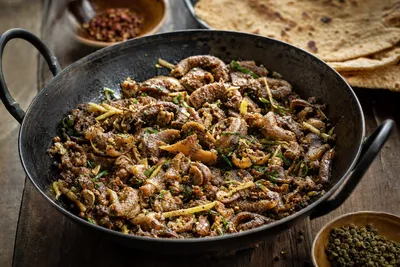
Thakali Khana is a Nepali set meal from Thak Khola in Mustang: rice sits in the middle of the plate, with dal, chicken curry, aloo tama (potatoes with fermented bamboo shoots), quickly fried greens and a tomato pickle arranged around it. Each part is simple on its own, but together they make the kind of plate Nepalis think of as home cooking. It's everyday food, and the whole point is to take a little of something different with every spoonful of rice.
Ingredients
- 12⅓ ozRiceshort grain or basmati, rinsed until the water runs clear
- 7 ozfor the dal, cooked soft and lightly mashedWhole, unhulled black gram beans, small and black with a pale interior; long cooking turns them creamy and slightly silky.Substitute: There is no true substitute: beluga lentils look similar and are also earthy, but they stay separate and never give the silky, creamy body that defines the dish. If you use them anyway, cook them for less time and thicken by mashing part of the pot.Read more
- 7 ozalternative to urad dal (optional)Hulled and halved pigeon peas, an everyday pulse in India and Nepal. They cook down to a mild, nutty, creamy purée.Substitute: Red lentils give a similarly creamy texture but cook faster and taste flatter. Yellow split peas look much the same but taste earthier and take considerably longer to break down.Read more
- 1⅔ lbChickencut into pieces, for the curry; optional in source 2
- 4 tbspheat to smoking point to remove bitternessCaution: Because of its erucic acid content, some mustard oil is labelled for external use only, so for cooking use only oil that is explicitly sold as edible.Cold-pressed oil from brown or yellow mustard seeds, golden to amber, with a sharp, pungent smell.Substitute: Rapeseed or canola oil comes from the same plant family and works as a base; a little mustard powder or freshly ground brown mustard seed brings back some of the heat. The characteristic pungent bite and full aroma, especially in pickles, cannot be matched this way.Read more
- 2 tbspfor the temperingClarified butter, cooked until the water and milk solids separate out; nutty and suited to high heat.Substitute: Clarified butter replaces ghee readily, though it tastes milder. To make ghee yourself, simmer unsalted butter gently until the milk solids on the bottom turn light brown, then strain.Read more
- 2Onionfinely sliced, caramelised for the curry
- 5Tomatosome chopped for the curries, the rest charred for the pickle
- 2Potatoescubed
- 5¼ ozcooked with the potatoes as aloo tamaCaution: Bamboo shoots contain cyanide-forming compounds when raw, so tama and any substitute shoots should be cooked thoroughly before eating.Young bamboo shoots, cut into strips and lacto-fermented, sour, strong-smelling and pleasantly crisp.Substitute: Sour pickled bamboo shoots from the Thai or Vietnamese shelf are a near-equivalent substitute. Ordinary canned bamboo shoots with a little lemon juice or vinegar match the crunch and acidity but not the fermented aroma that defines the dish; the result is fresher and flatter.Read more
- 7 ozcoarsely chopped, briefly sautéedLeaves of the mustard plant, deep green with a sharp, slightly bitter bite. Gundruk, by contrast, is the fermented and dried form of such leaves and tastes distinctly sour.Substitute: Spinach works but is milder, lacks the heat and wilts faster; a handful of rocket brings back some bite. Gundruk cannot be replaced by fresh leaves, because the fermented sourness would be missing.Read more
- 4 clovesGarlicfor the dal, the greens and the pickle
- 1 tbspbase of the curryFresh ginger and garlic ground together in roughly equal parts, often bound with a little oil or salt; ready-made jars are sold in Asian grocers.Substitute: Best made at home: grind peeled ginger and garlic in equal parts in a mortar or blender with a splash of oil, which tastes fresher than the jarred paste, often slightly sour from preservatives.Read more
- 2 tspCumin seedsfor the tempering and the potato curry
- 1 tspTurmericin the dal and the curries
- 1 tspChili powderfor the meat curry
- 1½ tspGround corianderpart of the curry spice mix (optional)
- ½ tspstirred in at the end (optional)A North Indian blend of toasted, ground spices such as cumin, coriander, cardamom, cinnamon, clove and black pepper, warm and fragrant rather than hot.Substitute: The best substitute is your own blend of toasted, freshly ground cumin and coriander seed with a little cardamom, cinnamon, clove and pepper; curry powder is not a replacement, as its turmeric and often fenugreek change the flavour and turn the dish yellow.Read more
- 2Dried red chiliessizzled in ghee for the tempering
- 2Green chiliesslit, for the curry and the pickle
- 1 tbspSesame seedsfor the tomato pickle
- 1Lemonjuice for pickle and curry, wedges to serve
- 1 bunchfresh corianderchopped, to garnish
- Saltseason every component
Method
- Cook and temper the dalRinse the split black lentils and simmer them in plenty of water with turmeric, crushed garlic and salt until soft, skimming off the foam as it rises. For the tempering, heat the ghee and let the cumin seeds and dried red chillies foam up in it, stir the whole lot into the dal, then cover and let it sit.
- Cook the riceRinse the rice until the water runs clear, bring it to the boil in twice its volume of water, then cover and cook over low heat for 15 to 20 minutes. Take it off the heat and keep it warm.
- Build the curry baseFor the chicken curry, heat mustard oil to smoking point — that takes the bitterness out of it — caramelise the finely sliced onions in it and fry the ginger garlic paste briefly alongside.
- Braise the chickenBrown the chicken pieces with turmeric, chilli powder, cumin and coriander powder and salt, add the chopped tomatoes and braise covered with a little water for 25 to 30 minutes, until the meat is tender. Stir in the garam masala and a squeeze of lemon juice at the end.
- Make the aloo tamaFor the aloo tama, heat mustard oil in a second pan with cumin seeds and a slit green chilli, fry the cubed potatoes with turmeric, then add tomato and the fermented bamboo shoots and cook with a little water until soft and thickened.
- Wilt the garlicky greensFry sliced garlic in mustard oil until golden, add the coarsely chopped mustard greens or spinach and let them collapse in the uncovered pan, then season with salt.
- Pound the tomato pickleFor the pickle, char the remaining tomatoes over an open flame or in the oven, pound them roughly with sesame seeds, garlic, green chilli, salt and lemon juice, and stir in mustard oil.
- Plate up and serveKeep all the components hot and taste them through once more. Put the rice in the middle of the plate, arrange the dal, chicken curry, aloo tama, greens and pickle around it, scatter with coriander leaves and serve with a lemon wedge.
Tips and variations
Instead of several separate bowls you can make one single curry: cook vegetables such as cauliflower, potato and beans — with meat if you like — in one pot and fold the cooked dal through. For the dal you can use split pigeon peas (toor dal), which soften faster in a pressure cooker, and for the rice choose between short grain and basmati. To keep it meat-free, leave out the chicken or swap in tofu and use oil instead of ghee; you can also stick to mustard oil throughout, or a neutral vegetable oil. If you're short on time, pickled chillies or mixed achar from a jar do the job of the freshly roasted tomato pickle. Serve everything at once and hot on one big plate, so everyone can help themselves to a bit of this and that alongside the rice.
Allergens
Contains: Milk (including lactose), Mustard, Sesame
Not every ingredient in this recipe has been checked, so nothing is promised as free from.
These notes follow from this recipe's ingredient list. Ready-made products and brands may contain further allergens — please check the packaging yourself.
Something not right?
This recipe was put together from independent sources and checked before publishing. Even so, a mistake can slip through — an amount that does not add up, a step that does not work as written. If you spot something, write to us: we will look into it and put it right.