Across the highlands · 40 min · Vegan · For preserving · For confident cooks
Mula Ko Achar
In German: Eingelegter getrockneter Rettich
For 4 servings · US units
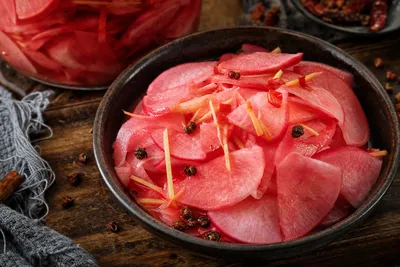
Nepali radish achar with mustard oil, Sichuan peppercorns (timur) and fenugreek
Mula Ko Achar is the Nepali pickle made from daikon radish: sharp, tangy, and given real depth by hot mustard oil with fenugreek seeds toasted dark. Timur ko choop and jimbu give it the particular note that sets it apart from any other pickled radish. It goes alongside roti or paratha, or with rice and dal — a spoonful turns a plain plate into a proper meal.
Ingredients
- 1⅛ lbpeeled, coarsely grated or thinly slicedA large white winter radish, juicy and crisp, mildly peppery raw and soft and sweetish when cooked.Substitute: Small red radishes work raw at a pinch but are sharper and less juicy; for cooked dishes, white turnip matches the texture better than the flavour.Read more
- 2 tspSaltto draw water from the radish and to season
- 1 tspTurmericfor colour and flavour
- 1 tspChili powderto taste for heat
- 2 tbspheated, for the temperingCaution: Because of its erucic acid content, some mustard oil is labelled for external use only, so for cooking use only oil that is explicitly sold as edible.Cold-pressed oil from brown or yellow mustard seeds, golden to amber, with a sharp, pungent smell.Substitute: Rapeseed or canola oil comes from the same plant family and works as a base; a little mustard powder or freshly ground brown mustard seed brings back some of the heat. The characteristic pungent bite and full aroma, especially in pickles, cannot be matched this way.Read more
- ½ tspwhole, darkened in the oil or dry-roasted and groundSmall, hard, yellowish-brown seeds of a legume, briefly fried in hot fat. Bitter and savoury, with an aroma reminiscent of maple syrup and curry.Substitute: There is no truly equivalent substitute, because the combination of bitterness and sweetish aroma does not occur in any common spice. Dried fenugreek leaves capture the aroma but are milder and are usually added towards the end rather than fried in the fat. If neither is available, it is better to leave the spice out than to replace it with mustard seed or fennel, which push the dish in a different direction.Read more
- 2 tbspLemon juicefreshly squeezed, for acidity
- 1 tsproasted and coarsely ground, or whole in the brineThe small brown or black mustard seeds used in Himalayan cooking are sold in Asian and Indian grocers, while the yellow seeds found in ordinary supermarkets are milder.Substitute: Yellow mustard seeds will do at a pinch, but they taste milder and less pungent, so use a little more.Read more
- ½ tsproasted and groundDried husks of a citrus-family shrub, not a true pepper. Lemony and floral, with a tingling, numbing effect on the tongue.Substitute: Timur and Sichuan pepper stand in for each other well. Black pepper with a little grated lemon zest roughly matches the aroma, but the tingling and numbing are lost entirely.Read more
- ½ cupVinegarrice or white wine vinegar, for the brined version (optional)
- 2 tbspSugaronly for the sweet-and-sour brine (optional)
- ¾ cupWaterfor the salt water or the vinegar brine (optional)
- 2 tbspSesame seedsroasted and ground, binds and rounds off (optional)
- 2dried red chiliesdry-roasted, for the spice blend (optional)
- 1 tbspdried Himalayan herb, briefly in the oil (optional)A dried herb from a wild allium of the Nepali highlands, fried in fat to give lentil dishes a mild, oniony, garlicky aroma.Substitute: There is no true equivalent, but dried chives briefly fried in ghee with a small pinch of finely chopped garlic point in the right direction. What is missing is the earthy, faintly smoky depth of the herb, and garlic easily takes over, so use it sparingly.Read more
- 1 clovesGarlicalternatively garlic oil instead of mustard oil (optional)
- chopped, to garnish (optional)The fresh leaves of the coriander plant, with a strong lemony, slightly soapy aroma.Substitute: There is no real substitute: flat-leaf parsley gives the fresh green but not the lemony aroma, and ground coriander seed tastes entirely different.Read more
Method
- Prepare the radishWash and peel the radish, then either grate it coarsely or slice it thinly — grated takes on the spices faster, sliced keeps more bite.
- Draw out the moistureSalt the radish, or let it sit briefly in salted water, then squeeze out the liquid firmly with your hands. If you have the time, spread the radish pieces out in the sun for one to two hours instead, so no moisture is left behind.
- Toast and grind the spicesFor the oil version, toast the mustard seeds in a dry pan until fragrant, and do the same with the Sichuan peppercorns and, if you like, the dried red chiles. Let everything cool and grind it in a mortar or a spice mill; the sesame seeds can be toasted and ground the same way. For the brined version the mustard seeds stay whole and go into the brine later.
- Mix radish with the spicesPut the squeezed radish in a bowl and mix it thoroughly with the turmeric, chile powder, salt, the ground spices and the lemon juice.
- Pour over the tempered oilHeat the mustard oil in a small pan, let the whole fenugreek seeds darken in it, swirl in the jimbu and a pinch of turmeric if you are using them, and pour the hot spiced oil straight over the radish. Stir it through quickly so the aroma spreads everywhere.
- Make the brine versionFor the brined version, bring the vinegar, water, sugar, salt and the whole spices — 1 tsp whole mustard seeds instead of ground, plus cloves and Sichuan peppercorns if you like — to a boil, layer the radish into a clean jar and pour the hot brine over it.
- Let it steepClose the jar, let it cool and leave it in the fridge to steep; the oil version can be eaten right away. Either way, the flavour is at its best after a day or two, once the radish has taken up the spices.
- Garnish and serveScatter with chopped cilantro before serving and bring it to the table with rice and dal or with flatbread.
Tips and variations
The quick sweet-and-sour brine of vinegar, sugar and salt is the gentler sister of the oil version. Garlic oil works in place of mustard oil: fry the garlic clove in the hot oil until golden, then remove it before pouring the oil over the radish. For something creamier, stir in roasted ground sesame; for something bolder, make your own blend of roasted chiles, Sichuan peppercorns and salt (timur ko choop) and add jimbu to the hot mustard oil. With the sun-dried version, fennel and asafoetida suit the spice mix, and cloves and Sichuan peppercorns can go into the brine. A piece of beetroot in the jar turns the radish a pretty pink. Serve it in small bowls next to the rice and dal so everyone can help themselves.
Allergens
Contains: Mustard
May contain if you use the optional ingredients: Sesame
Not every ingredient in this recipe has been checked, so nothing is promised as free from.
These notes follow from this recipe's ingredient list. Ready-made products and brands may contain further allergens — please check the packaging yourself.
Something not right?
This recipe was put together from independent sources and checked before publishing. Even so, a mistake can slip through — an amount that does not add up, a step that does not work as written. If you spot something, write to us: we will look into it and put it right.